LUCY ARAI
ABOUT THE ARTIST
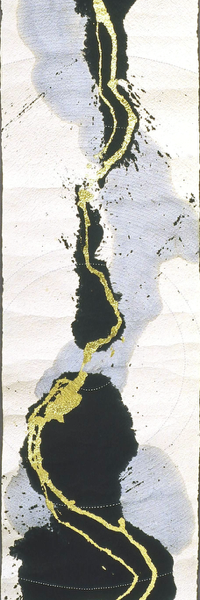
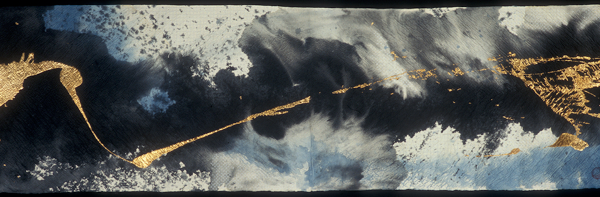
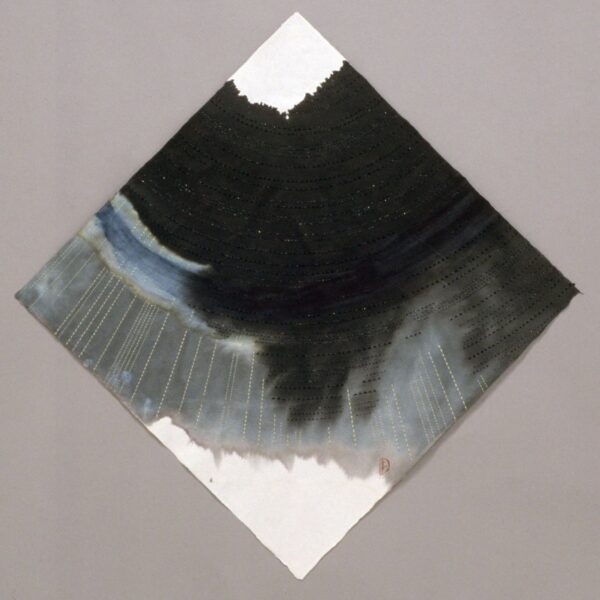
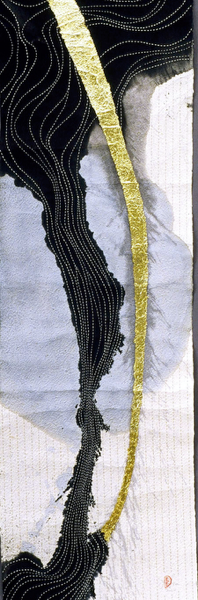
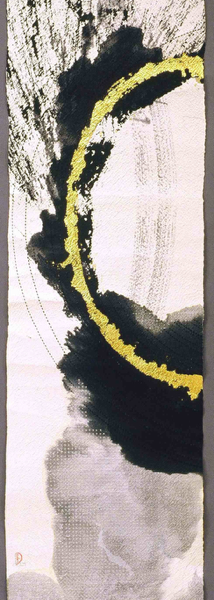
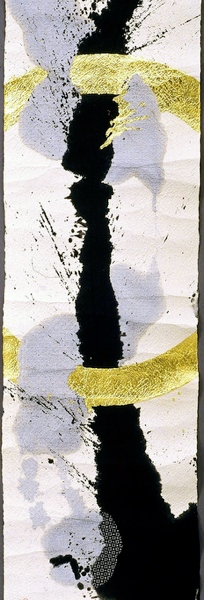
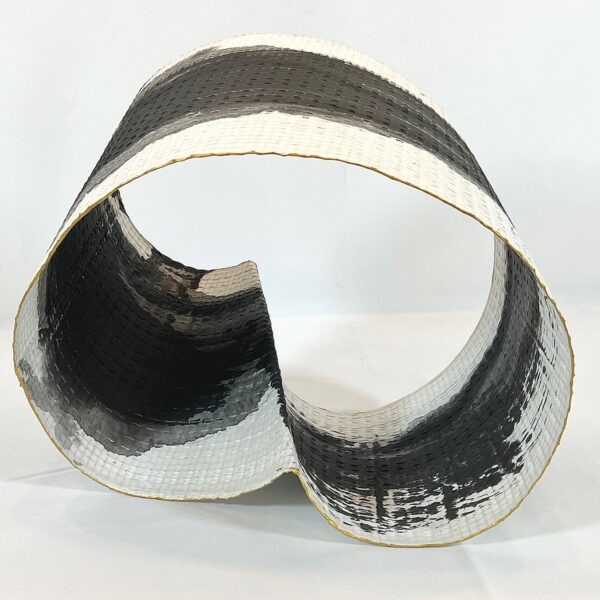
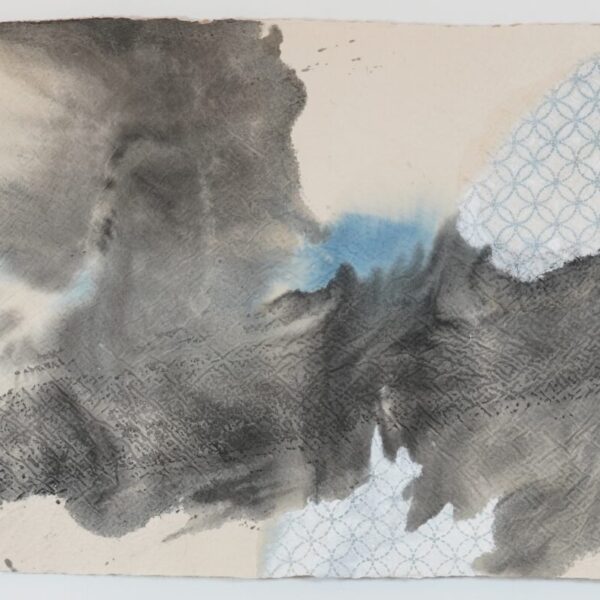
Lucy Arai creates at the confluence of tradition and innovation. She uses temari (Japanese embroidered hand-balls) and sashiko (Japanese running-stitch tradition) to fabricate structures; to articulate details in forms; and to respond to fluid deposits of ink on handmade papers. Her playfulness with materials, acute attention to detail, and disciplined work ethic are apparent in the robust handling of sumi (ink) that is punctuated with responsive hand-sewing that accentuates, connects, and separates layers of compositional elements into cohesive relationships. Arai earned a Master of Fine Arts degree (MFA, 1983) and Graduate Certificate of Museum Practices (1985) from the University of Michigan, and a Bachelor of Fine Arts cum laude degree (BFA, 1979), from the University of South Carolina. She was Assistant Curator of Cranbrook Academy of Art/Museum and worked on the restoration of Saarinen House (1985-86). George G. Booth founded Cranbrook Educational Community in 1927 and enlisted Finnish architect Eliel Saarinen to realize his vision for a place that educates and integrates daily life with design and production; it was this vision that inspired Arai to leave and establish her studio in 1987. Arai is an active participant in the U.S. Department of State Arts in Embassies Program; her work is currently exhibited in the Ambassador’s residence in Tirana, Albania. She was also nominated for the 2005 Louis Comfort Tiffany Biennial Award, and is an AsiaAlive Artist at the Asian Art Museum of San Francisco. Arai works full-time in her studio and is a freelance Museum Education and Public Program Consultant for special exhibitions.
ARTIST STATEMENT
The interplay between the sumi ink, indigo pigment, and how I responded with sashiko stitching was the beginning of my awareness that I had effectively created a means to express from a part of me that is beyond the reach of words. Since I was 3 or 4 years of age, I became aware that there was something inside that needed to come out. The wordless transmission of Japan’s sashiko stitching tradition from my Tokyo uncle to me at age 15 has become the literal, figurative, and visceral thread of my life’s journey that connects my Japanese half to my American half; my heart to my mind to my body to others to the diverse population of the world, to all animate and inanimate life as small as subatomic particles and as large as the cosmos.
Since 2007, my body gave me a poorly timed and badly wrapped gifts that I accepted the forced time-out from the studio was the opportunity I needed to process, learn, and heal in order to emerge with a clear and fluid conduit in place to work again. I am emerging now with the awareness that I stitch with a needle and thread in the same manner as human beings have sewn to meet the essential need to protect the body from the elements and labors of their lives throughout time and across all differences. This essential need dates back to 60,000 years ago as evidenced by a bone sewing needle in South Africa and 50,000 years ago in Siberia by Denisovans who predate Neanderthals. It is an exciting threshold to stand, because the humble needle and thread is now an eloquent and structural medium through which I create forms with tension; hold conversations with my illiterate handling of ink and brush, the medium of aristocrats and literati; and visualize how the essential needs of humanity can be the connective thread to piece, quilt, strengthen relationships for a world in crisis.
The echoes of my past resound with memories of feeling like two people in one body. Today I live a life fully aware that the struggles of navigating personal circumstances have the exact same dynamic forces that every person experiences to live life with stability, balance, and the sense of belonging. What I have learned is that balance is an organic and perpetual process of adjusting and connecting to everything outside of ourselves and within; just like the characteristics of the circle. Like our essential needs for survival, all human beings all share this intrinsic characteristic.
When I examine the most fundamental and essential needs and characteristics of humanity, we are the same. The differences that separate, divide, and distinguish humanity is the ways the needs are met through the entirety of human history.